In pursuit of polymathic thinking
I treat learning as the highest form of self-creation. As a bullet chess player in the top 0.3% globally, I bring logic and strategic thinking into the classroom. Not as metaphor, but as method.
I design structured, gamified learning experiences that help students gain clarity and confidence in language. What begins as learning English is meant to lead somewhere broader: the ability to think across contexts, disciplines, and difficulties.
Chess and software are not separate from teaching. They reflect the same focus: understanding how thinking works, improving it, and helping others do the same. Start with English. End with the ability to think anywhere.
Scholarship
My research argues that nature is not a passive backdrop to human meaning-making, it is an active participant. Through zoosemiotics and phytosemiotics, I examine how animals, plants, and ecosystems generate and transmit signs independently of human intention.
I am also developing a theory of aesthetics that treats aesthetic experience not as taste, but as individuality in motion: the moment a person becomes more fully themselves through constant exposure to stimuli.
Kuṟuntokai in Acrostic Verse
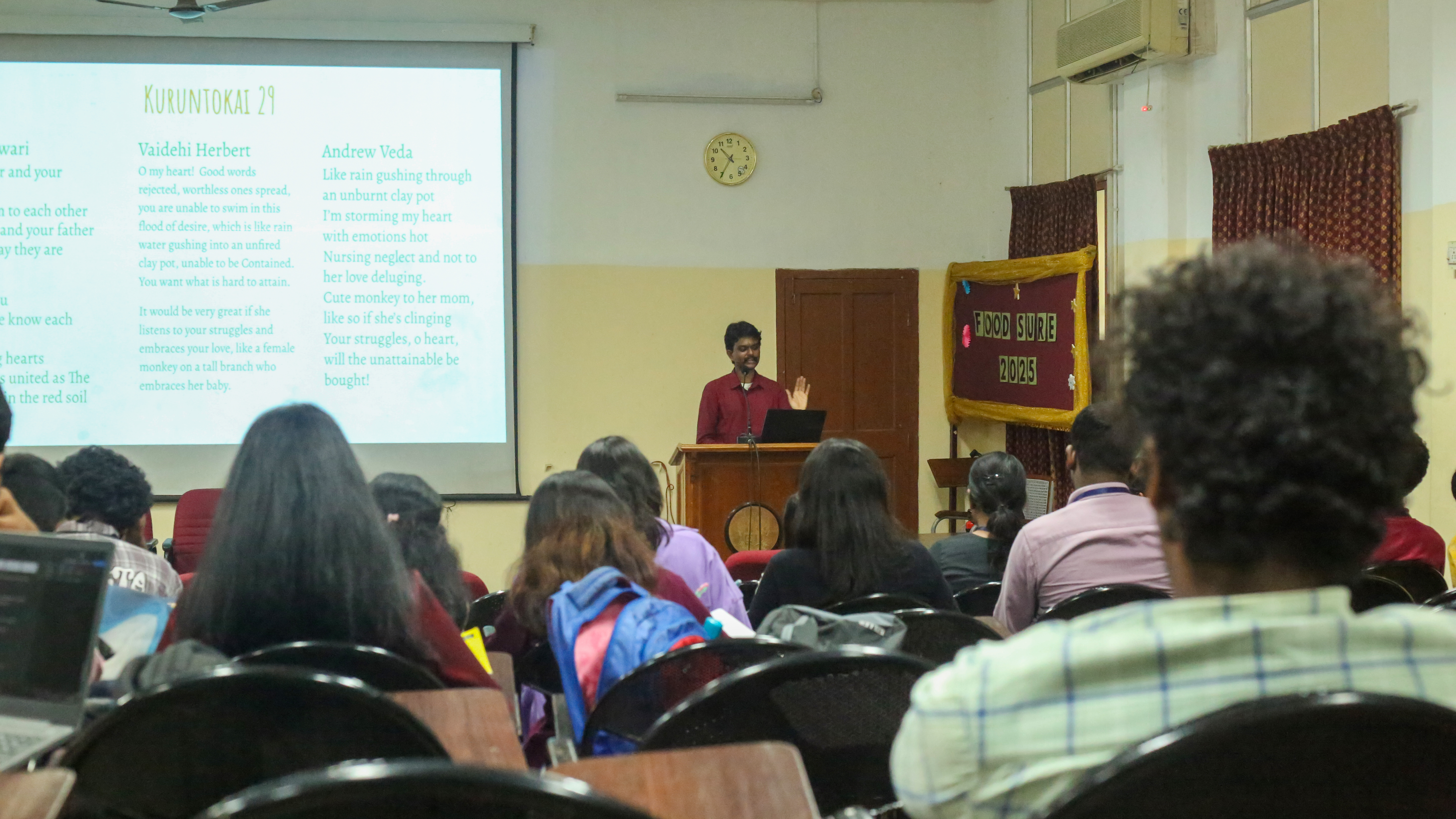
A complete translation of the classical Tamil Sangam anthology into English acrostic verse (all 402 poems), foregrounding female gaze, emotional agency, and narrative dominance. Written from within the tradition.
The Guilty Reader: Acrostic Form and the Recovery of Intimate Address in Sangam Tamil Translation →A Classroom for Polymaths.
The classroom is a design problem. Every session is an intervention designed to shift how a student thinks, not just what they know. I document this work: failed experiments, small victories, the slow realisation that curiosity can be engineered.
My current obsession is the cryptic crossword as a pedagogy of ambiguity: training students to hold multiple meanings simultaneously, to delay closure, to enjoy not knowing yet.
Everything I do is aimed at instilling in my students the desire to become the best version of who they can be. A classroom designed not just for competence, but for polymathic growth. Learning English is the door. Thinking anywhere is the destination.
Read: Cryptic Crosswords in ESL Classrooms → Cryptic Re-perception: A Cognitive Framework for Creative-Critical Thinking → Cryptic Re-perception: A Neuroscience-Informed Pedagogical Framework for AI-Structured Argumentative Writing in Indian Tertiary ESL Classrooms →The game that sharpens everything.
Chess taught me that clarity is not the absence of complexity. It is complexity made navigable. I am an active rapid, blitz, and bullet player, rated 2200+ in both blitz and bullet, placing me in the top 0.3% globally. In chess, every game is a catalogue of small failures and overlooked possibilities. They are lessons waiting to be discovered.
Whether a result is recorded as a win or a loss, it emerges from someone's failure to find the best move. For chess players, the search for the best move, a double exclamatory brilliancy, matters more than the destination of a checkmate born of a blunder. Chess therefore teaches a rare kind of accountability. There is nowhere to hide. There is no one else to blame, and every mistake is an opportunity for growth.
That is why chess players develop an unusual relationship with failure. We do not merely endure it. We study it, embracing antifragility and return stronger because of it. The pursuit of perfection is the willingness to confront one's mistakes honestly and improve. It is a celebration of failure. That lesson lives in every class I teach.
Publications & Talks
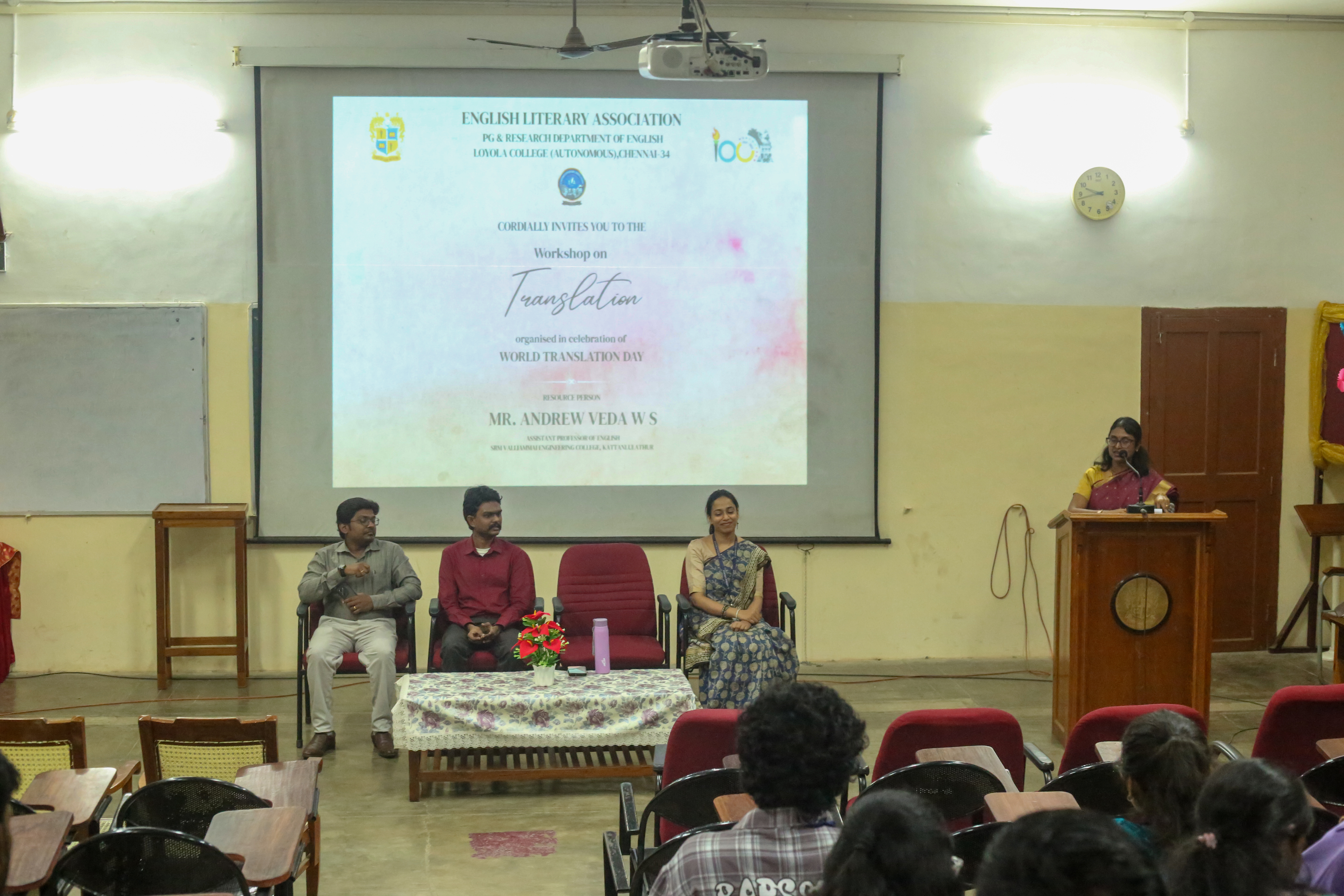
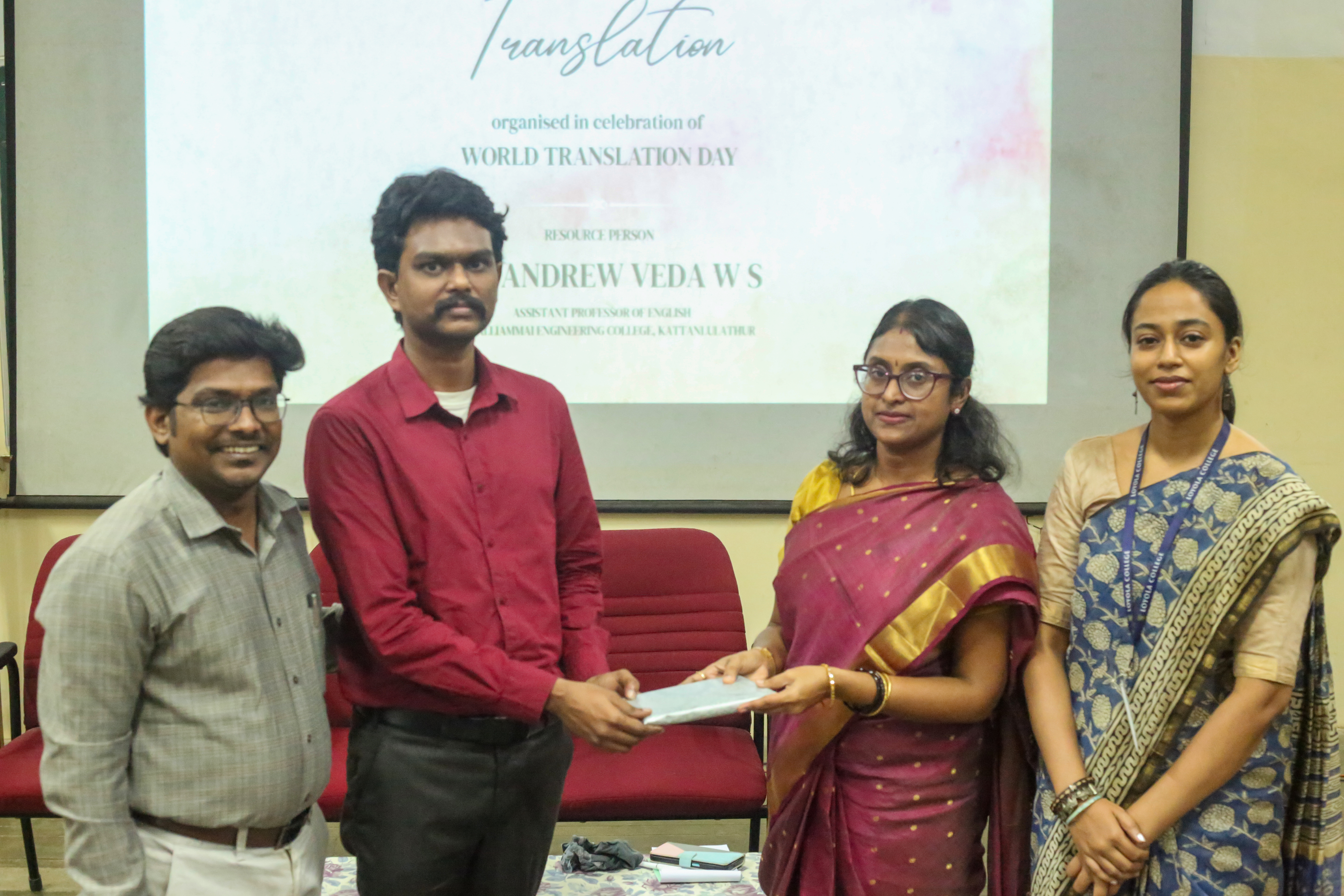
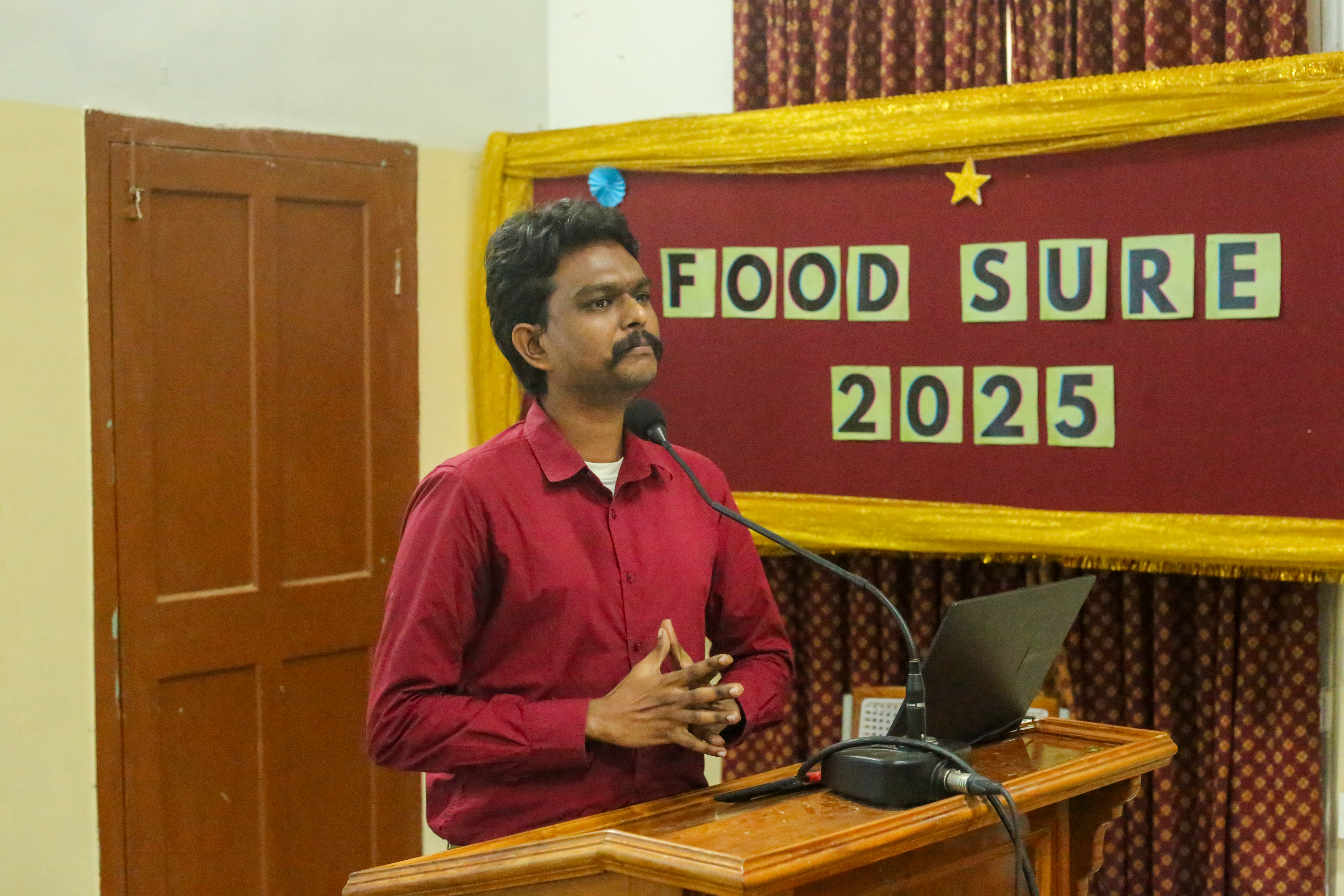
My academic work spans journal articles, conference papers, invited lectures, and workshops across literature, semiotics, pedagogy, and translation. I have conducted workshops on translation at Loyola College, Chennai, in celebration of World Translation Day.